
Bike culture · 3 min read
5 surprising facts about the bikes and scooters we love
By the Decalz team · Updated 15 November 2026
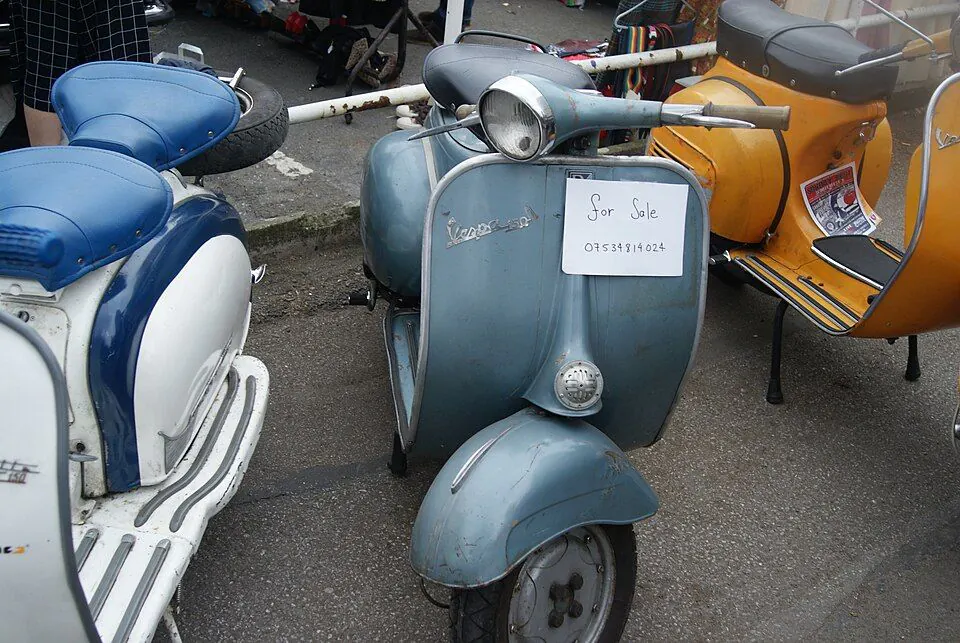
Behind every iconic bike there is an idea that changed the road. Here are five checked facts about machines you see every day, from the Italian scooter of 1946 to the maxi-scooter that created its own category.
1. Vespa: the scooter named after a wasp
The first Vespa came out in 1946 at Piaggio in Italy. "Vespa" means "wasp" in Italian, a name inspired by the machine's shape and buzz. It became the symbol of urban mobility.
2. Honda Super Cub: over 100 million built
Launched in 1958, the Super Cub passed 100 million units produced in 2017. According to Honda, it is the most-produced motor vehicle in history. Its recipe: simple, reliable and economical.
3. Yamaha TMAX: the sporty maxi-scooter
Arriving in 2001, the TMAX launched the sporty maxi-scooter category, with a chassis close to a motorcycle's. It remains a benchmark in town and on the road, and one of the most customised models.
4. Kawasaki Z1: ancestor of the Z family
The 1972 Kawasaki Z1, with its 903 cc four-cylinder engine, left its mark on Japanese motorcycle history. The Z family, including today's Z900, descends from that legend.
5. Ducati Monster: the modern naked bike
Launched in 1993, the Monster popularised the naked bike: no full fairing, simple and light, showing off its engine. Almost every brand followed the formula afterwards.
And yours?
Every bike has its story. Pick yours on our site to see the kits that fit it, or send us your model: we make it to order if it is not on the list.
Keep reading
 Read the guide
Choosing · 5 min read
How to choose the right design for your bike
Racing, military, Moroccan zellij, street or premium: how to choose a graphics kit design that suits your bike, your base colour and your style.
 Read the guide
Choosing · 4 min read
Graphics kit, paint or stickers: what should you choose for your bike?
A simple comparison of vinyl graphics kits, paint and single stickers for a motorcycle or scooter: cost, lead time, reversibility and durability.